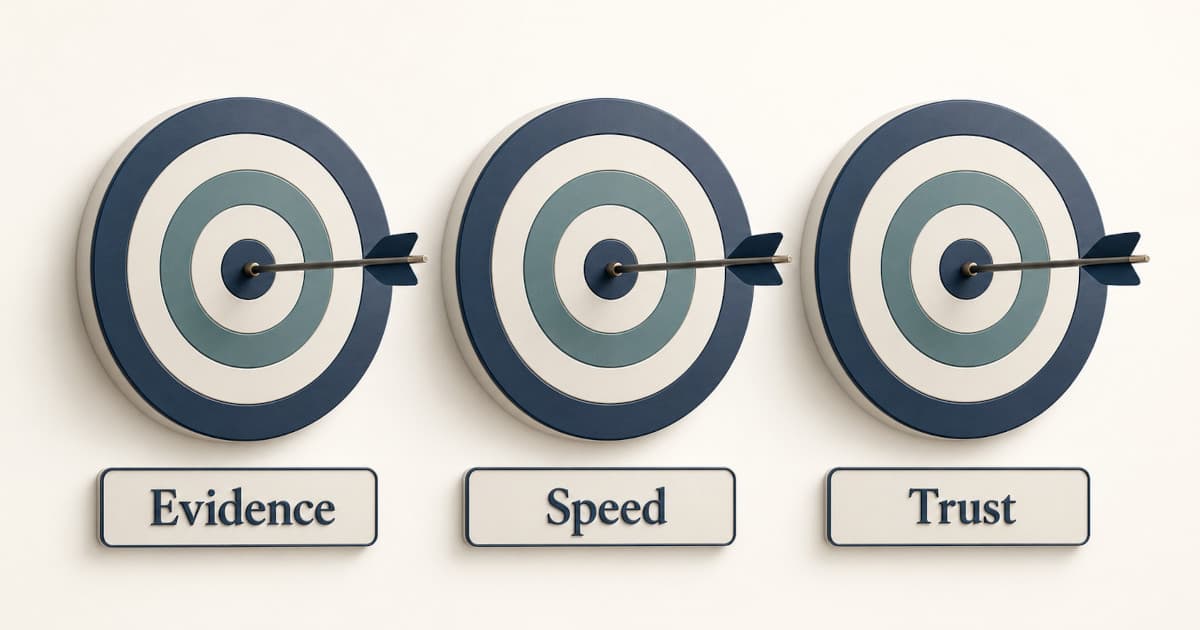
Investor Questions: Testing Evidence, Speed and Trust
See how founders can answer investor questions with the evidence, consistency and speed needed to build conviction.
By the time an investor is asking detailed questions, they usually want to believe. Diligence is the phase where interest hardens into conviction - or where it quietly stalls. And what most often decides which way it goes isn't the answers themselves. It's how fast they come, whether they hold together, and whether the investor can check them.
Handled well, the Q&A phase builds confidence. Handled badly, it drains the momentum a deal needs to close.
What the Q&A phase is really testing
Every diligence process generates a stream of questions. What's the churn on your top customers? Does this contract auto-renew? Why does headcount in the deck differ from the org chart? Each is reasonable on its own.
But the questions aren't only about the answers. Investors are assessing something broader - whether you are genuinely in control of your business. Do the numbers reconcile? Are risks acknowledged or hidden? Can you produce the evidence behind a claim, or only the claim? Diligence rewards clarity and speed over polish, because clarity is itself evidence of a well-run company and speed shows you have urgency and can respond quickly.
Why it stalls
Two things tend to turn the Q&A into a bottleneck.
The first is searching. When information is scattered across systems and inboxes, every question becomes a small investigation. Multiply that across dozens of questions and several investors, and answering becomes a part-time job at exactly the moment you should be closing - not to mention the day-to-day of running the business!
The second is inconsistency. When answers live in separate email threads rather than against the documents they refer to, founders re-answer the same questions - sometimes slightly differently. Small contradictions creep in, and each one gives an investor a reason to dig deeper rather than move forward.
Preparation is key
A great deal of diligence is predictable. Experienced investors ask about the same things: customer concentration, churn and retention, contract terms, unit economics, the legal and IP position, and any two figures that don't obviously reconcile.
You can prepare for these before they're asked:
- Anticipate the obvious questions for your stage and sector, and have the supporting evidence organised in advance.
- Reconcile your own numbers first. If revenue appears differently in two places, find out why before an investor does, and be ready to explain it.
- Keep a running Q&A record. Logging questions and answers as they come prevents you from re-answering the same thing inconsistently to different investors, and means common questions are answered once.
Answer with the source attached
The strongest answers come with their evidence. Rather than asserting that revenue is what you say it is, point to where it lives - the relevant contract clause, the financial line, the record behind the number.
Answering this way helps in three concrete ways:
- It's faster to trust. The investor can confirm the answer themselves instead of asking for the underlying document, which removes a round of back-and-forth.
- It's consistent. Answers grounded in the same source material don't contradict each other or the rest of your materials.
- It signals control. Showing where an answer comes from says you have nothing to hide - which is precisely what diligence is trying to establish.
An answer an investor can verify is worth far more than a confident assertion they have to take on faith.
Protect the momentum
Momentum is the quiet currency of a fundraise. Interest is highest early and erodes with every delay. The practical goal during diligence is to keep the process moving while conviction is building - which means answering quickly, consistently, and with evidence.
The questions were always going to come. The advantage goes to the founders who've done the preparation, kept their numbers reconciled, and can answer with the receipts attached - turning the part of the deal that usually drags into the part that builds belief.
Frequently asked questions
Speed, accuracy, and traceability. A good answer arrives quickly, is consistent with everything else in your materials, and points to the document or record it came from. An answer an investor can verify for themselves builds more confidence than one they have to take on trust.
Because each unanswered or inconsistent question forces the investor to pause and the founder to go searching. Momentum is fragile once diligence begins - every delay is a chance for conviction to cool or for competing priorities to intervene. Answering quickly and consistently keeps the process moving while interest is high.
Anticipate the predictable ones - churn, customer concentration, contract terms, the gap between any two numbers that don't obviously reconcile - and have the supporting evidence organised before the questions arrive. Keeping a running record of questions and answers also prevents you from re-answering the same thing differently to different investors.
Related Articles
The Fundraising Paradox: How Raising Capital Slows Growth
See why fundraising can slow businesses down, and how founders can protect focus while raising capital.
Does Your Data Room Build Conviction or Break It?
Learn how to build a data room that strengthens investor conviction and keep fundraising momentum.
How Transparent Reporting Helps You Scale Faster
Discover how transparent reporting builds investor trust, improves visibility and helps leadership teams scale faster.
Put this into practice
Navaris builds a live record of your business from the systems you already run, so the reporting is ready whenever someone asks.